Baroxon® | Leading Boom Barrier Manufacturer

How to Choose an Automatic Parking Boom Barrier for Your Site
Release time:
2026-10-28
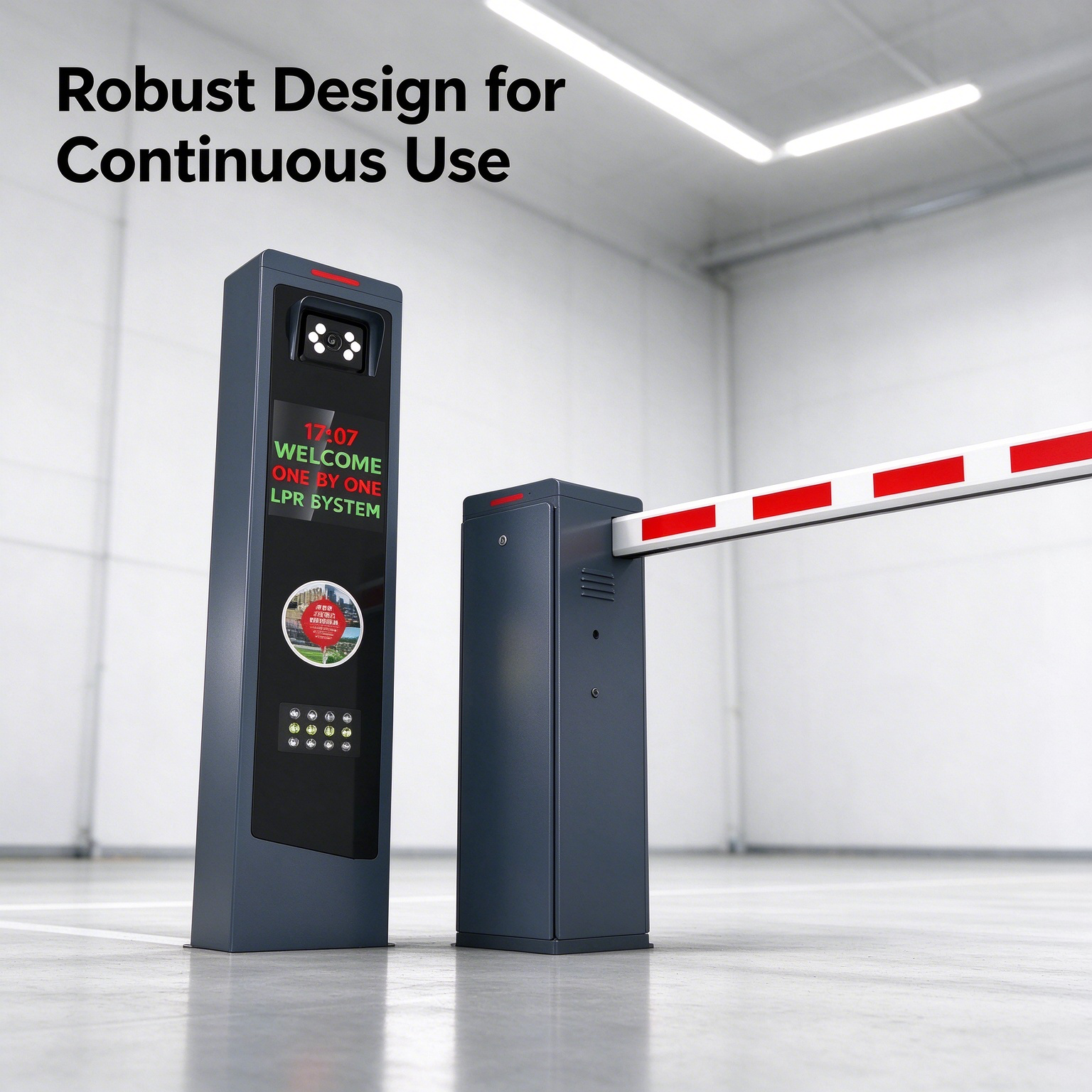
A barrier is a long-term purchase: once the foundation is poured and the cables are laid, changing the model means repeating most of the work. That is why selection should start with the entrance, not with a product list. The nine steps below follow the order in which the decisions actually depend on each other.
1. Start with the entrance conditions
Measure the lane width at the point where the arm will cross it, then measure the height from the road surface to the lowest obstacle above the lane: a beam, a pipe, a canopy, a lighting fixture or the ceiling of an underground car park. These two numbers eliminate most of the range immediately. Also check where the cabinet can stand — it needs a stable base, access for maintenance and a position that does not obstruct the pedestrian route or the turning path of a large vehicle.
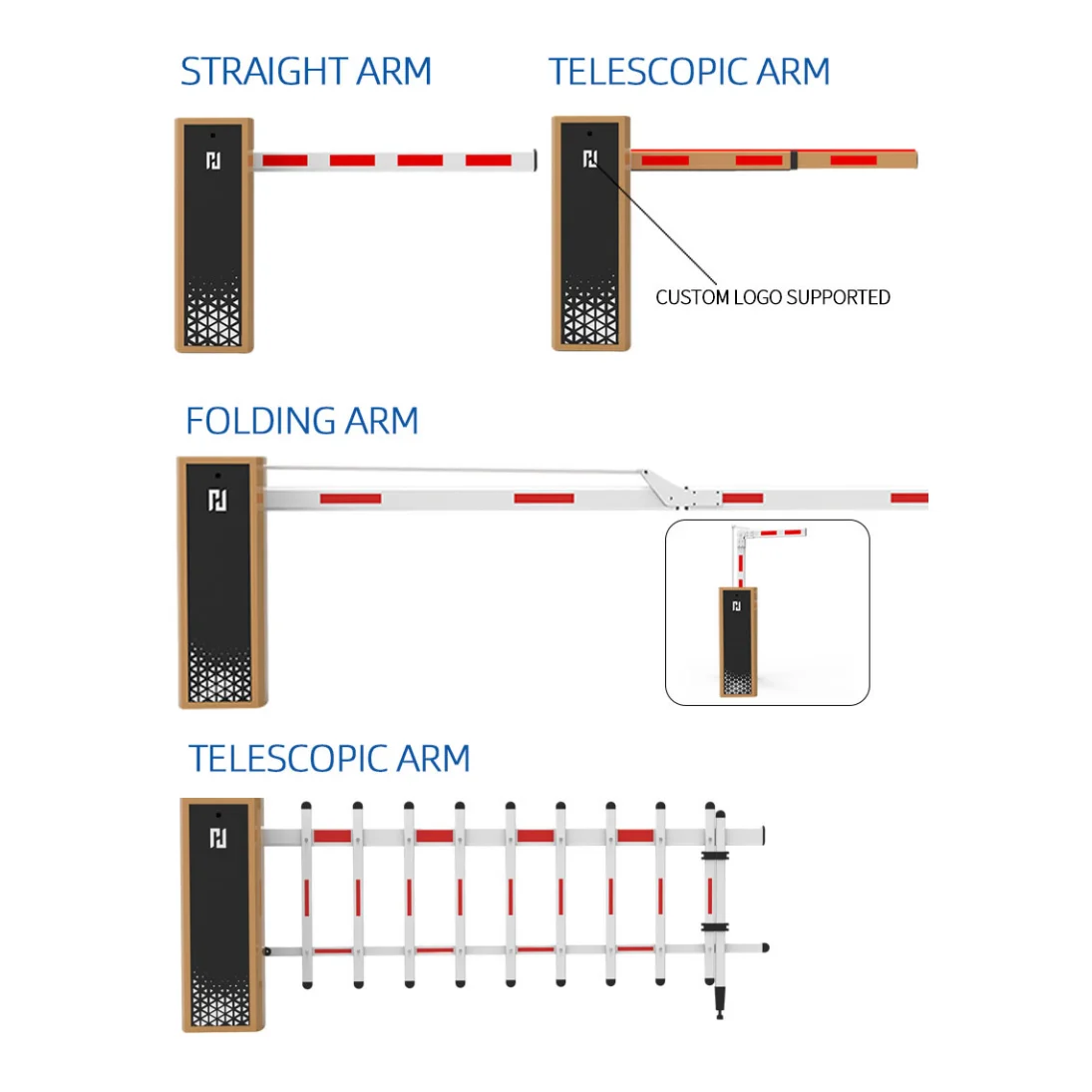
2. Choose the appropriate arm type
Straight arm
The default choice for an open entrance with enough space above the lane. Simple, reliable, available in a wide range of lengths. It requires clearance equal to roughly the arm length plus a margin.
Folding arm
Needed where the height is limited: underground car parks, covered passages, entrances under a canopy. The arm folds as it lifts, so it needs much less vertical space — but it needs a correctly set trajectory and a clear folding zone.
Reinforced or extended arm
Used when the lane is wider than standard or when the arm is exposed to wind. A longer arm loads the drive and the spring more heavily, so it must be confirmed for the specific model, not assumed.
3. Calculate the traffic intensity
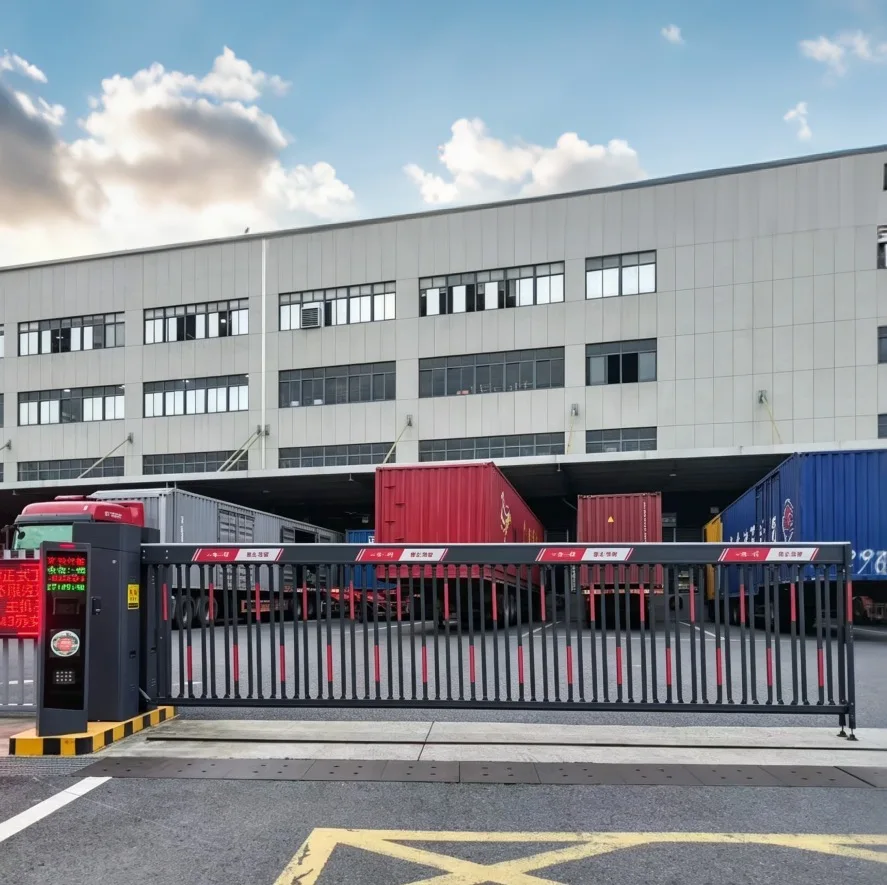
Count the vehicles per day and, more importantly, per peak hour. A private yard with twenty movements a day and a commercial car park with four hundred movements in the morning peak need fundamentally different drives. Ask for the duty cycle and the recommended number of cycles per day for the exact configuration — the same model may be rated very differently with a short and with a long arm.
4. Define the access control method
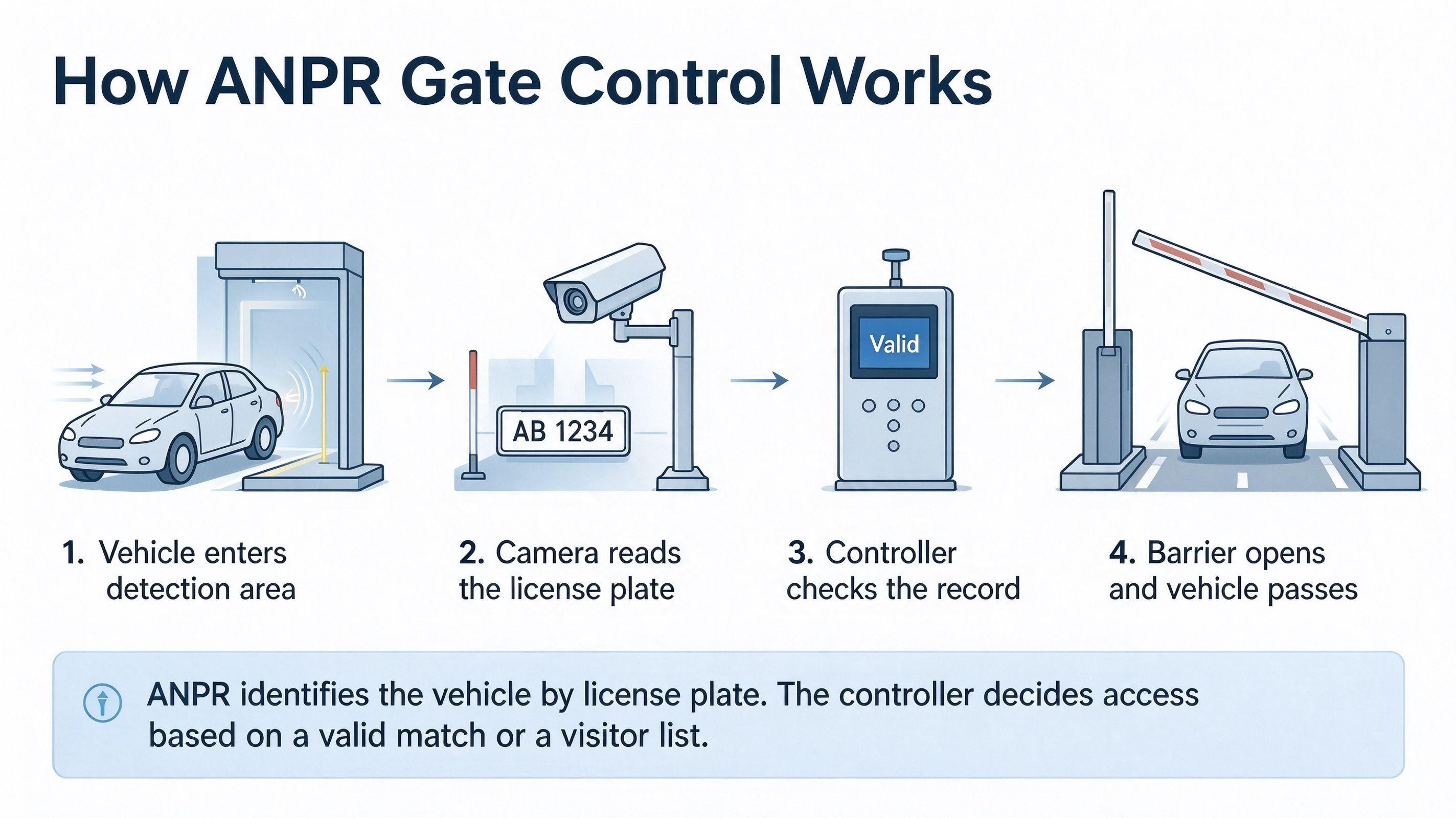
Decide how a vehicle proves it may enter: a card, a UHF tag, a number plate read by a camera, a QR code, an intercom call or an operator button. This decision determines the controller and its interfaces, and it usually determines the real speed of the lane. A barrier that opens in one second behind a verification that takes ten seconds does not improve throughput.
5. Do not economise on safety
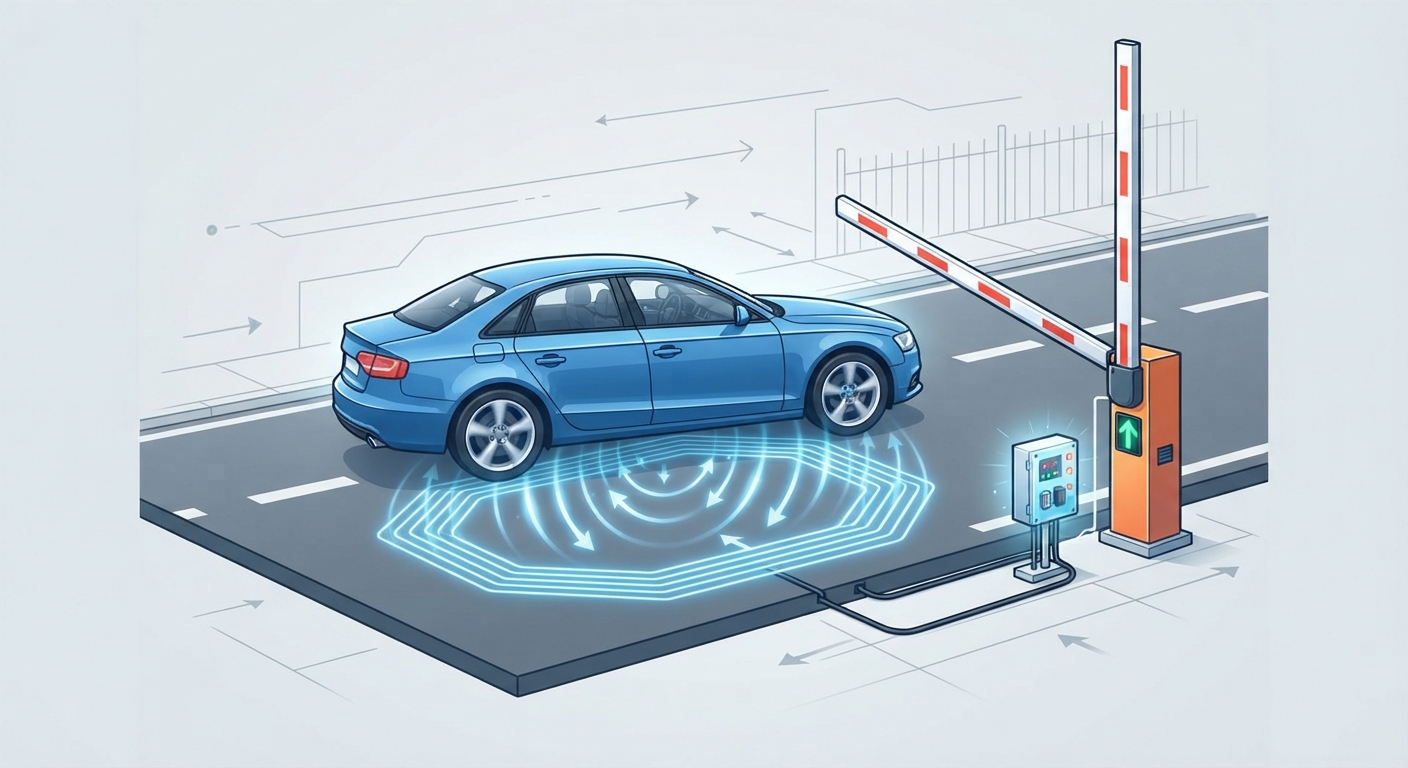
The barrier must know whether the lane is clear before it closes. An inductive loop, photocells or a radar sensor provide that information. The anti-crash function stops and reverses the arm if it meets an obstacle. A manual release allows the arm to be raised during a power failure. These are not optional extras on a site with pedestrians, cyclists or vehicles towing trailers.
6. Take the climate and operating conditions into account
Check the operating temperature range of the specific model, the ingress protection of the enclosure, the anti-corrosion treatment and the behaviour of the mechanism in snow and ice. In regions with long winters, the barrier needs a drive that is rated for low temperatures and a maintenance schedule that includes the cold season. A model rated for a mild climate will fail in the first serious frost.
7. Compare the total cost of ownership
Add to the purchase price: foundation and civil works, cabling, sensors, controller interfaces, integration, commissioning, scheduled maintenance and the expected repairs over the service life. A barrier that costs less initially but needs a drive replacement in year three is not cheaper. Ask for the price of the main wear parts — spring, controller board, motor — before you buy.
8. Quick selection table
| Site type | Recommended arm | Drive class | Typical access method |
|---|---|---|---|
| Private yard, few vehicles | Straight, short | Standard | Remote control or keypad |
| Residential compound | Straight or folding | Standard to medium | RFID tag for residents, recognition for visitors |
| Office or business centre | Straight | Medium | RFID for staff, QR or recognition for visitors |
| Commercial car park | Straight, reinforced | High-speed, high duty cycle | Recognition with ticket backup |
| Underground car park | Folding | Medium | RFID or recognition |
| Industrial or logistics site | Straight, long or reinforced | Heavy duty | UHF RFID, recognition, gatehouse procedure |
9. What data to prepare for the supplier
Prepare a short brief: lane width, height to the lowest obstacle, vehicles per day and per peak hour, site type, intended access method, existing software and interfaces, minimum winter temperature and whether the entrance is staffed. Add photographs of the entrance and a simple plan showing where the cabinet and the sensors can be installed. With this brief a supplier can confirm a specific model and arm length instead of quoting a generic category.
Frequently asked questions (FAQ)
Which automatic barrier is best for a private car park?
A standard barrier with a straight arm and a simple control method — remote control, keypad or a short-range reader. The traffic is low, so a high-speed drive adds cost without adding value.
When is a folding arm needed?
When the clearance above the lane does not allow a straight arm to lift fully: underground car parks, covered passages, entrances under canopies or pipes. The exact configuration must be confirmed after measuring the height.
Can an automatic barrier be connected to license plate recognition?
Yes, if the controller accepts the command from the recognition software. The specific controller, camera and software combination must be confirmed before ordering, including the firmware versions.
Which parameters should be checked first?
Arm length and type, duty cycle, opening time for that arm length, operating temperature and ingress protection. These five values eliminate most unsuitable models before price is even discussed.
Conclusion
Selection is a sequence of measurements and definitions, not a comparison of brochures. Measure the entrance, choose the arm, calculate the traffic, define the access method, plan the safety devices, check the climate and only then compare prices on a total cost basis. A barrier chosen in this order will still be working when the cheaper alternative has already been replaced.
Latest News
Baroxon® | Leading Boom Barrier Manufacturer
Advanced Security Access Control and Intelligent Parking Solutions.
Company Strength
Adequate Inventory
Fast Shipping
Our Products
CONTACT US
Address: No. 2 Wanshou Road, International Innovation Industrial Park, Jinan, Shandong, China







© 2026 Baroxon® | Leading Boom Barrier Manufacturer

Contact Us
Our passion is to bring your ideas to life. Work with our design team to create a one-of-a-kind custom finish or cladding system to create a truly unique space. Together we can make your story stand out. If you need something to request a sample, request pricing, or request a demo, please fill out the contact form below. Explain your request in as much detail as you can and a representative will contact you within 1 business day.