Baroxon® | Leading Boom Barrier Manufacturer

RFID vs License Plate Recognition for Parking Access Control
Release time:
2026-10-28
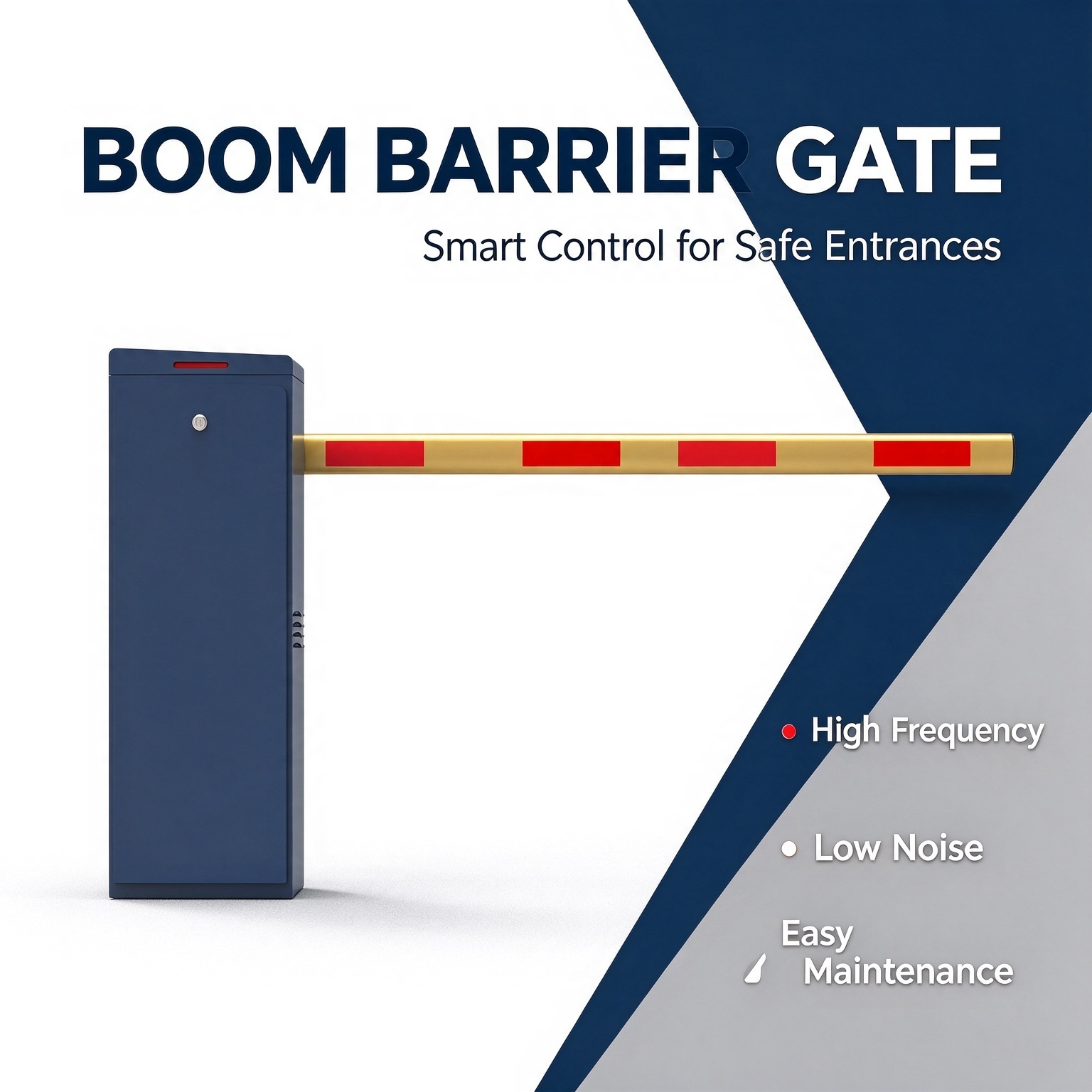
Two technologies dominate automatic parking access today: RFID, where a card or tag identifies the vehicle, and license plate recognition, where a camera reads the number plate. Both open a barrier without human intervention, and both are sold as "automatic access". They behave very differently in practice, and most well-designed sites end up using both.
1. What is RFID parking access control?
RFID access control gives each authorised vehicle a physical credential: a low-frequency or high-frequency card, a windshield tag, or a UHF sticker read at a distance. The reader at the lane captures the credential, checks it with the controller or the software, and opens the barrier. Reading is fast — a UHF tag can be read while the vehicle is still moving — and does not depend on weather, lighting or plate condition. The cost is administrative: every vehicle needs a tag, tags get lost, damaged or transferred between vehicles, and the database has to be kept up to date.
2. What is license plate recognition (LPR/ANPR)?
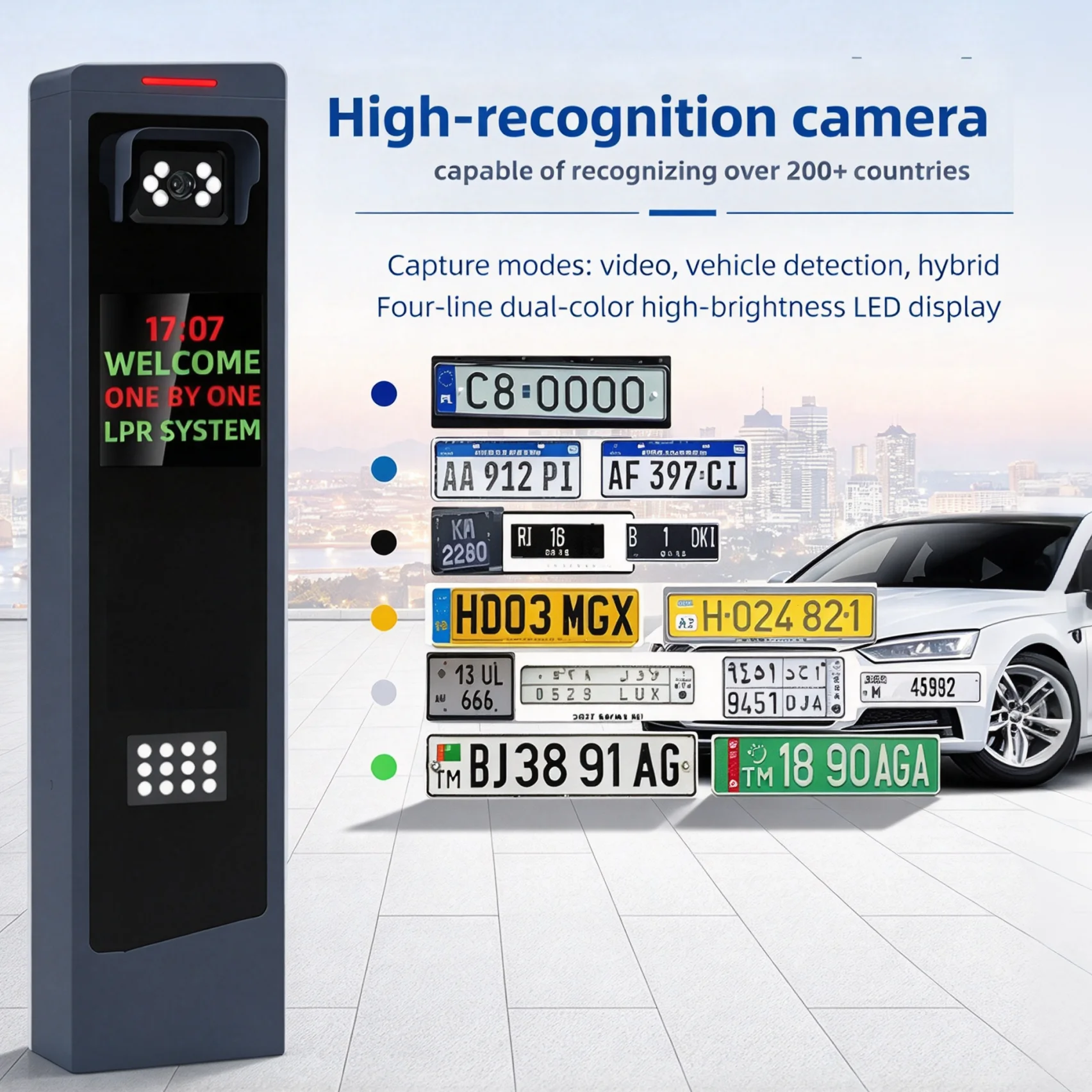
License plate recognition uses a camera and a recognition engine to convert the plate image into characters, then compares the result with a list. There is no physical credential: the vehicle is identified by its plate. This makes LPR far more convenient for visitors, tenants and short-term users, and it produces a photographic record of every passage. The weaknesses are environmental and geometric: dirty plates, trailers, unusual fonts, low sun, heavy rain, snow on the plate and a badly positioned camera all reduce the recognition rate.
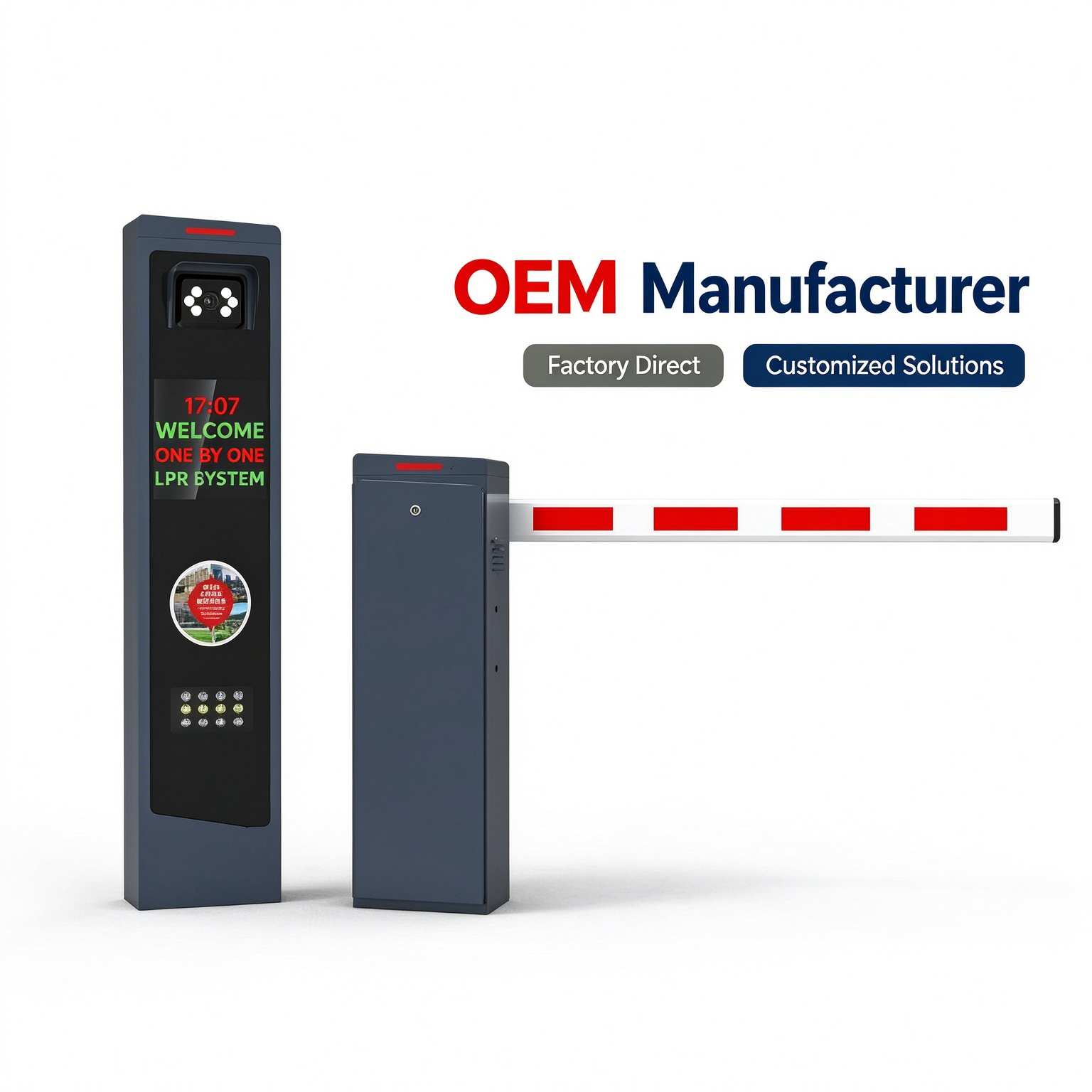
3. RFID and LPR/ANPR compared on the main criteria
| Criterion | RFID | LPR/ANPR |
|---|---|---|
| Credential | Card, tag or sticker issued to the vehicle | The vehicle's own number plate |
| Typical reading speed | Under one second, can read while moving | One to three seconds including recognition |
| Dependence on weather and light | Almost none | Noticeable in rain, snow, low sun, dirt |
| Visitor handling | Requires issuing a temporary tag | Works immediately, no issuing step |
| Accuracy limits | Tag must be present and valid | Plate must be clean, visible and legible |
| Record of passage | Event log with credential ID | Event log with photo of the vehicle |
| Administration | Issuing, replacing and revoking tags | Maintaining allow lists and rules |
| Cost structure | Readers plus tags per vehicle | Cameras, software licences, installation |
4. Which technology fits which site
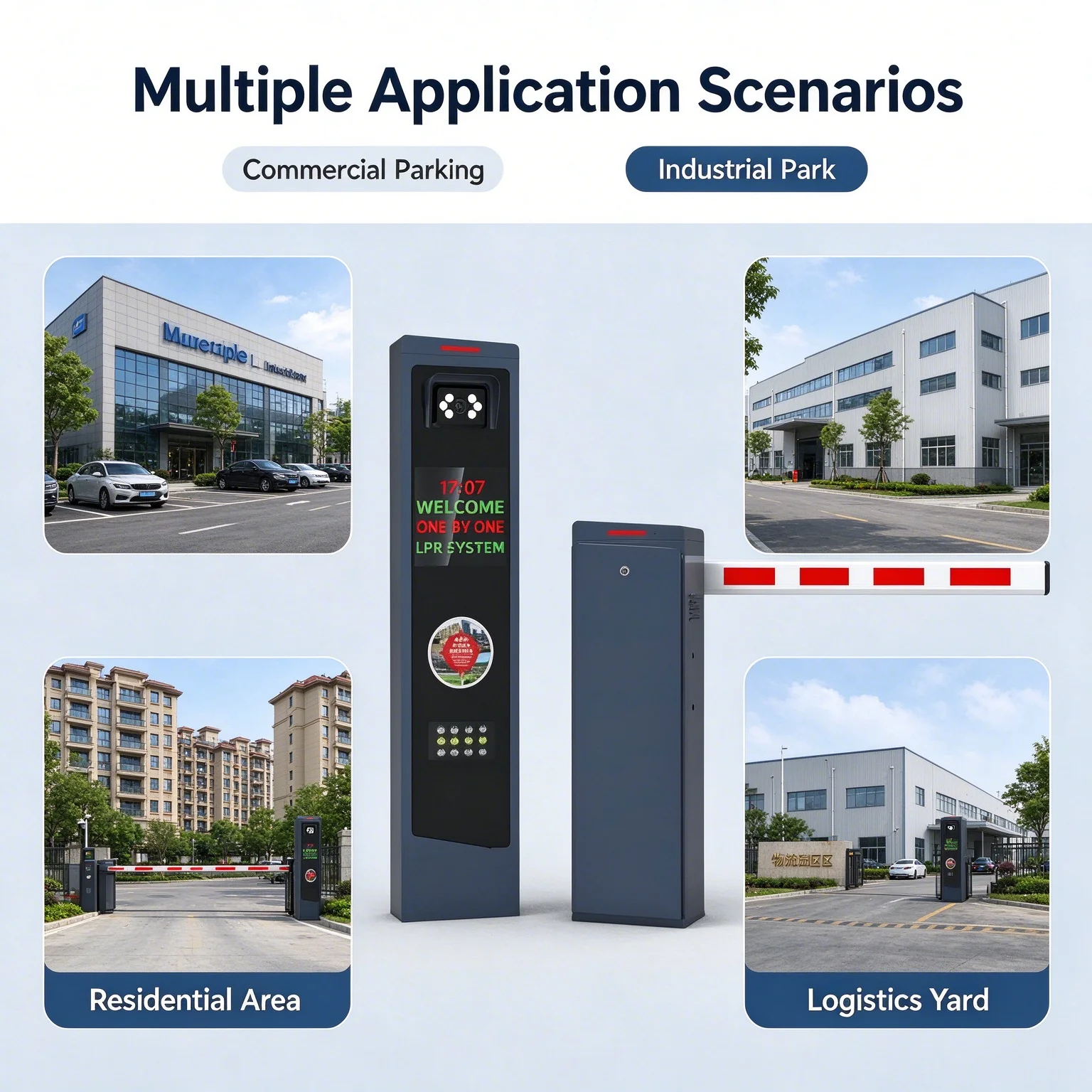
Residential compound or gated community
Residents are stable users who keep a vehicle for years, so RFID is efficient: issue a tag once and the entrance works in any weather. Recognition is best reserved for visitors and for residents' second vehicles. A hybrid is the usual answer.
Office parking or corporate site
Staff can be issued tags, and visitors can be handled by recognition or by a reception-issued QR code. Time-based rules — who may enter on which days and hours — are easier to enforce in software than with tags alone.
Commercial car park with high traffic
Throughput matters most. Recognition removes the issuing step for every new visitor and produces a plate-based record that supports paid parking. RFID is kept for season-ticket holders. Recognition accuracy under bad weather has to be tested on site, not assumed.
Industrial site or logistics terminal
Vehicles are often large, plates are frequently dirty or obscured, and trailers hide the rear plate. RFID or long-range UHF identification is more reliable here, usually combined with a manual procedure at the gatehouse for unregistered vehicles.
5. Can RFID and plate recognition be combined?
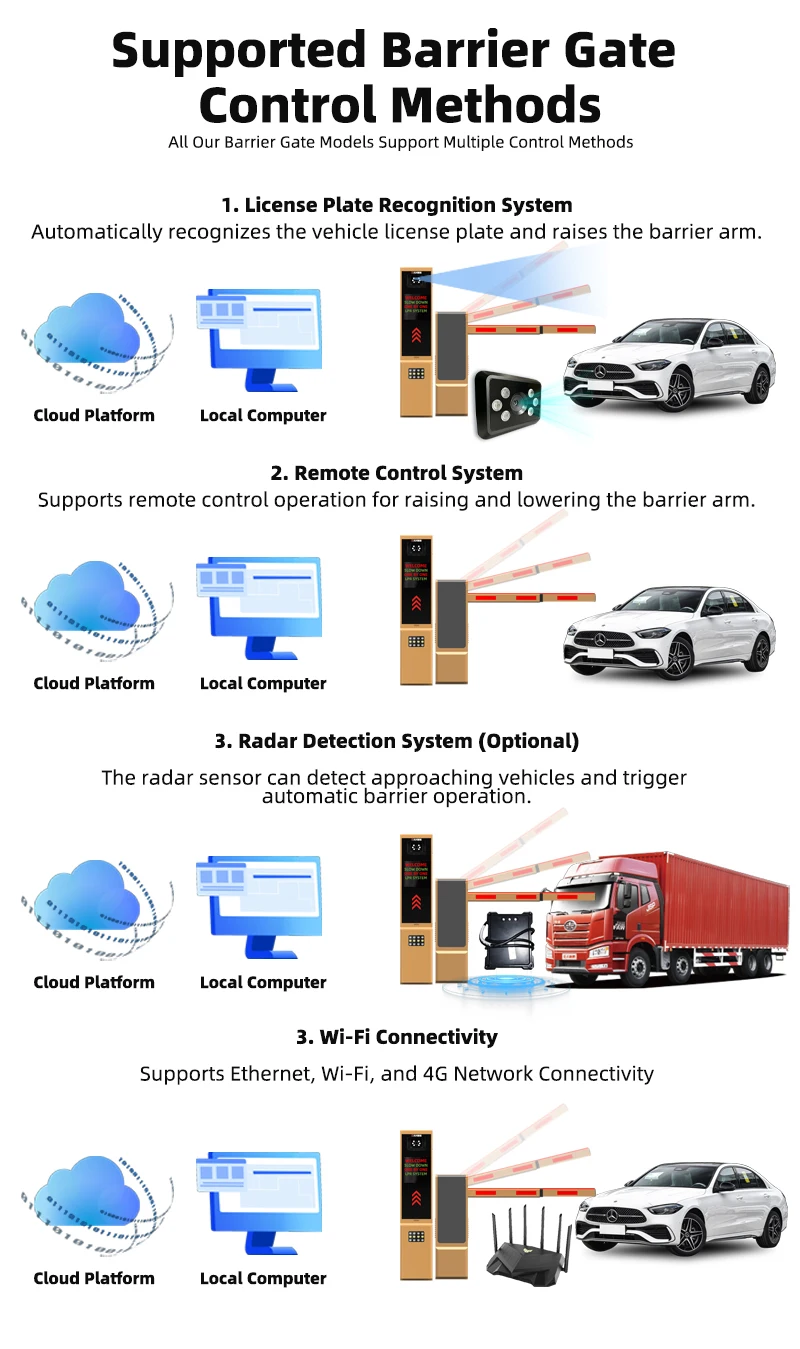
Yes, and on mixed sites this is usually the best configuration. The controller accepts commands from both systems, and the software applies a priority rule: a valid RFID tag opens the barrier immediately, while a vehicle without a tag is processed by recognition. The combination gives fast passage for regular users, convenient access for visitors, and a fallback when one of the technologies fails. The main requirement is a single source of truth for the access rules, so that a revoked user does not remain authorised in one of the two systems.
6. What affects the cost of implementation?
For RFID, the cost drivers are the reader, the controller interface and the number of tags issued, plus the administration effort over time. For recognition, the cost drivers are the camera, the software licence per lane, the installation and configuration of the camera position, and the effort of maintaining the allow lists. In both cases add the barrier, the safety devices, the cabling and the integration work. A comparison that counts only the reader or only the camera is incomplete.
7. Security, resilience and data protection
RFID tags can be copied if the technology is not protected, so choose cards and readers with mutual authentication where the risk justifies it. Recognition systems store images and plate numbers, which are personal data: define retention periods, restrict access to the logs and inform visitors. Both systems must define behaviour when the network is down: a controller with a local allow list can keep working, while a purely cloud-dependent system cannot.
8. How to choose the right BAROXON solution
Describe the site before comparing products: how many vehicles, how many of them are regular users, how many are visitors, what the climate is, whether plates are usually clean and visible, and whether the entrance is staffed. BAROXON offers barriers with RFID configurations, recognition-ready barriers and radar sensors for lane safety, so the identification layer can be matched to the traffic rather than the other way round.
Frequently asked questions
Which is easier to deploy: RFID or LPR?
RFID is simpler technically — a reader, an interface and a batch of tags — but it requires an issuing process for every vehicle. LPR requires careful camera positioning and software configuration, but no issuing process. For a site with many short-term visitors, LPR is usually faster to deploy in practice.
Does plate recognition work at night and in bad weather?
It works at night if the lane is properly illuminated with infrared or white light, and it works in rain and snow with a reduced recognition rate. The realistic approach is to test the specific camera and engine on the specific lane in the worst conditions the site experiences, and to keep a fallback procedure for failures.
Can RFID and LPR share one barrier?
Yes. The barrier controller accepts commands from both systems, and the access software decides which credential takes priority. This is the standard configuration for sites with a mix of regular users and visitors.
Which technology is more secure?
They protect against different risks. RFID protects against unauthorised vehicles but can be defeated by a copied tag. Recognition protects against tag sharing because it binds access to the plate, but it can be defeated by a cloned plate. A combination, together with a photo log, gives the strongest practical protection.
Conclusion: RFID, LPR or a hybrid system?
Use RFID where users are stable and weather is harsh; use recognition where visitors are numerous and a plate record is valuable; use both where the site has a mixed population. The barrier is the same in all three cases — the difference is in the identification layer and in the discipline of maintaining the access rules.
Latest News
Baroxon® | Leading Boom Barrier Manufacturer
Advanced Security Access Control and Intelligent Parking Solutions.
Company Strength
Adequate Inventory
Fast Shipping
Our Products
CONTACT US
Address: No. 2 Wanshou Road, International Innovation Industrial Park, Jinan, Shandong, China







© 2026 Baroxon® | Leading Boom Barrier Manufacturer

Contact Us
Our passion is to bring your ideas to life. Work with our design team to create a one-of-a-kind custom finish or cladding system to create a truly unique space. Together we can make your story stand out. If you need something to request a sample, request pricing, or request a demo, please fill out the contact form below. Explain your request in as much detail as you can and a representative will contact you within 1 business day.