Baroxon® | Leading Boom Barrier Manufacturer

Straight vs Folding Boom Barrier Arm: Which to Choose?
Release time:
2026-10-28
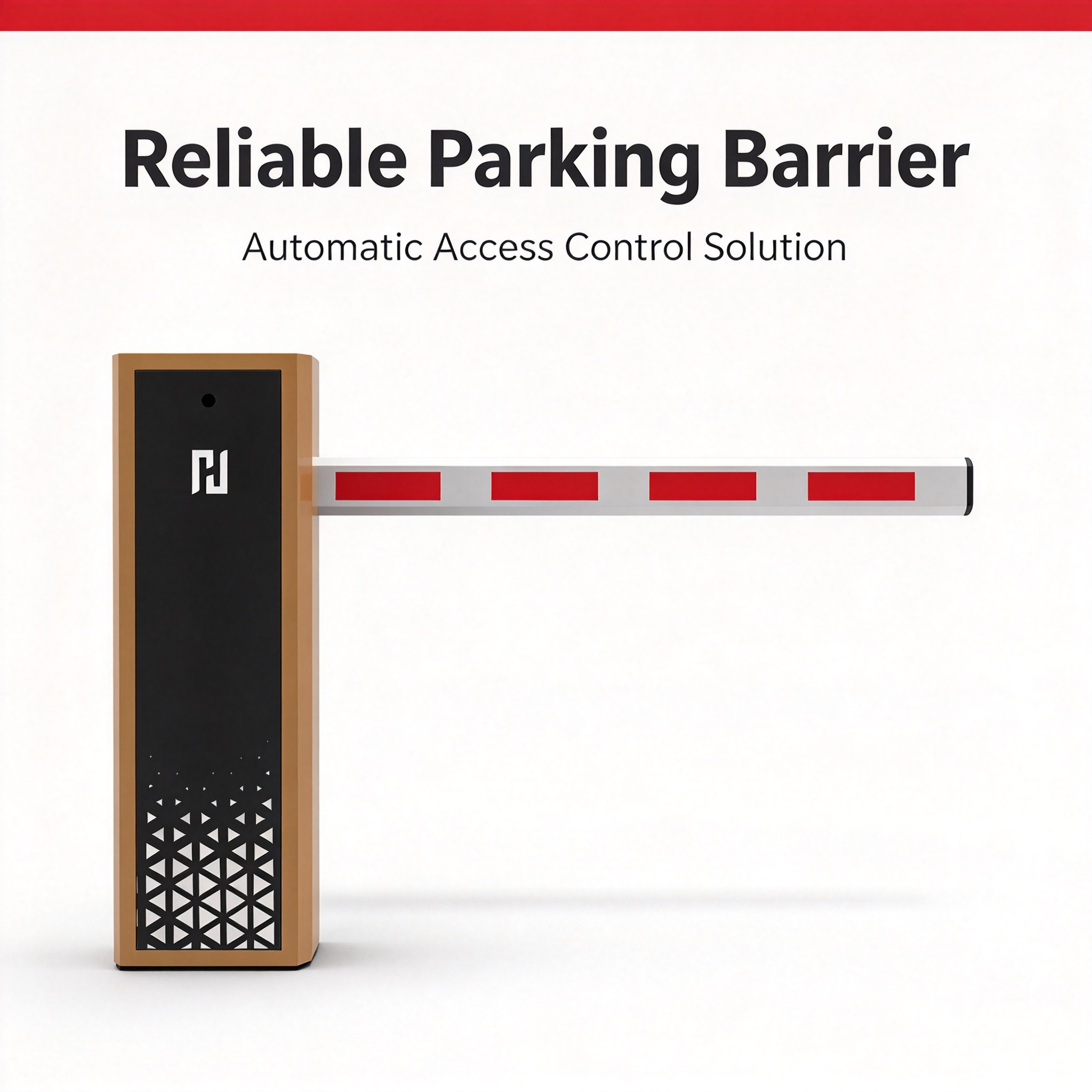
The arm is the part of the barrier that the driver sees, and the choice between a straight and a folding arm is the decision that most often has to be made during design. The two types solve different problems: the straight arm is the default for open entrances, while the folding arm exists specifically to work where the vertical space is limited. Choosing the wrong type is expensive, because it usually becomes obvious only after the foundation is built.
1. What is the difference between a straight and a folding arm?
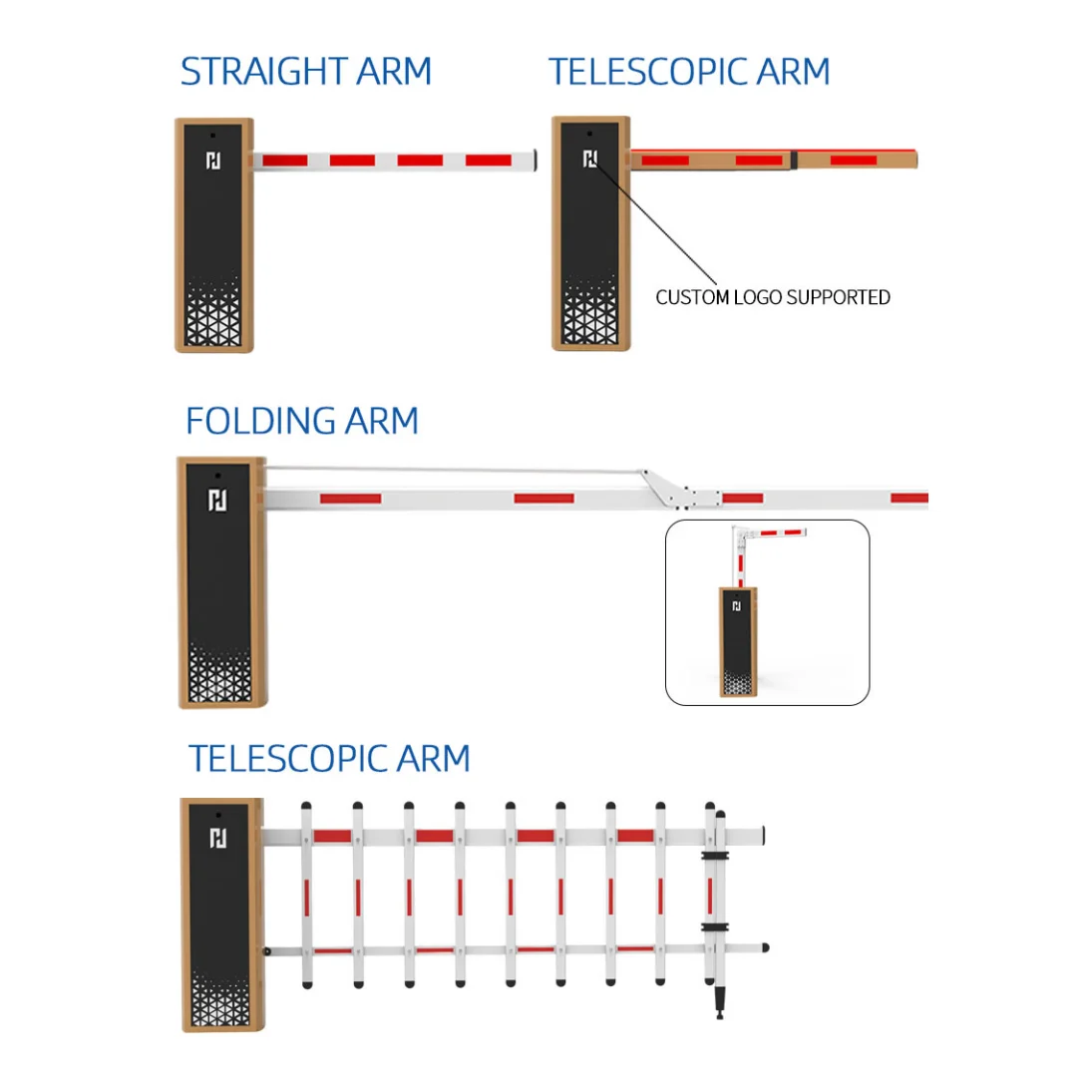
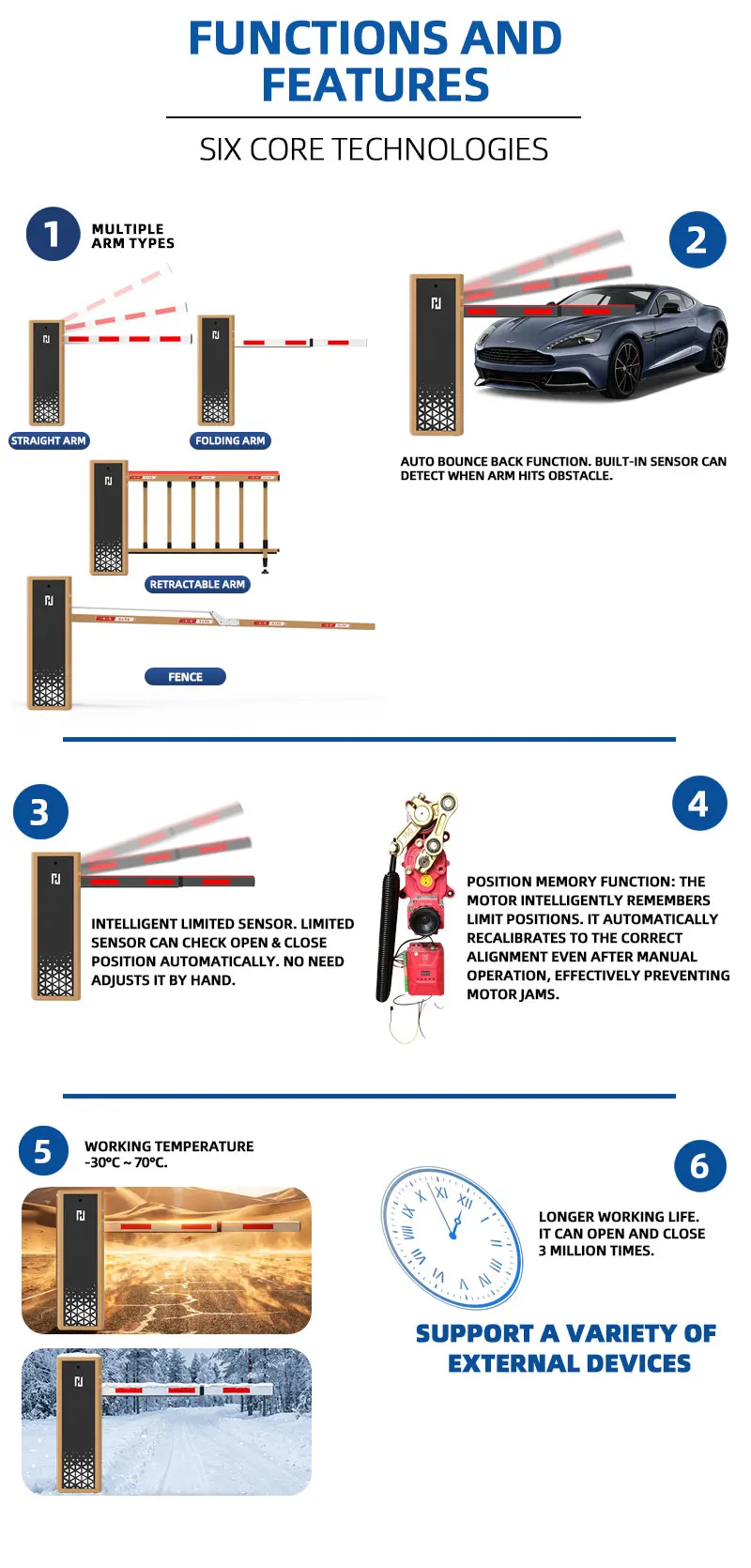
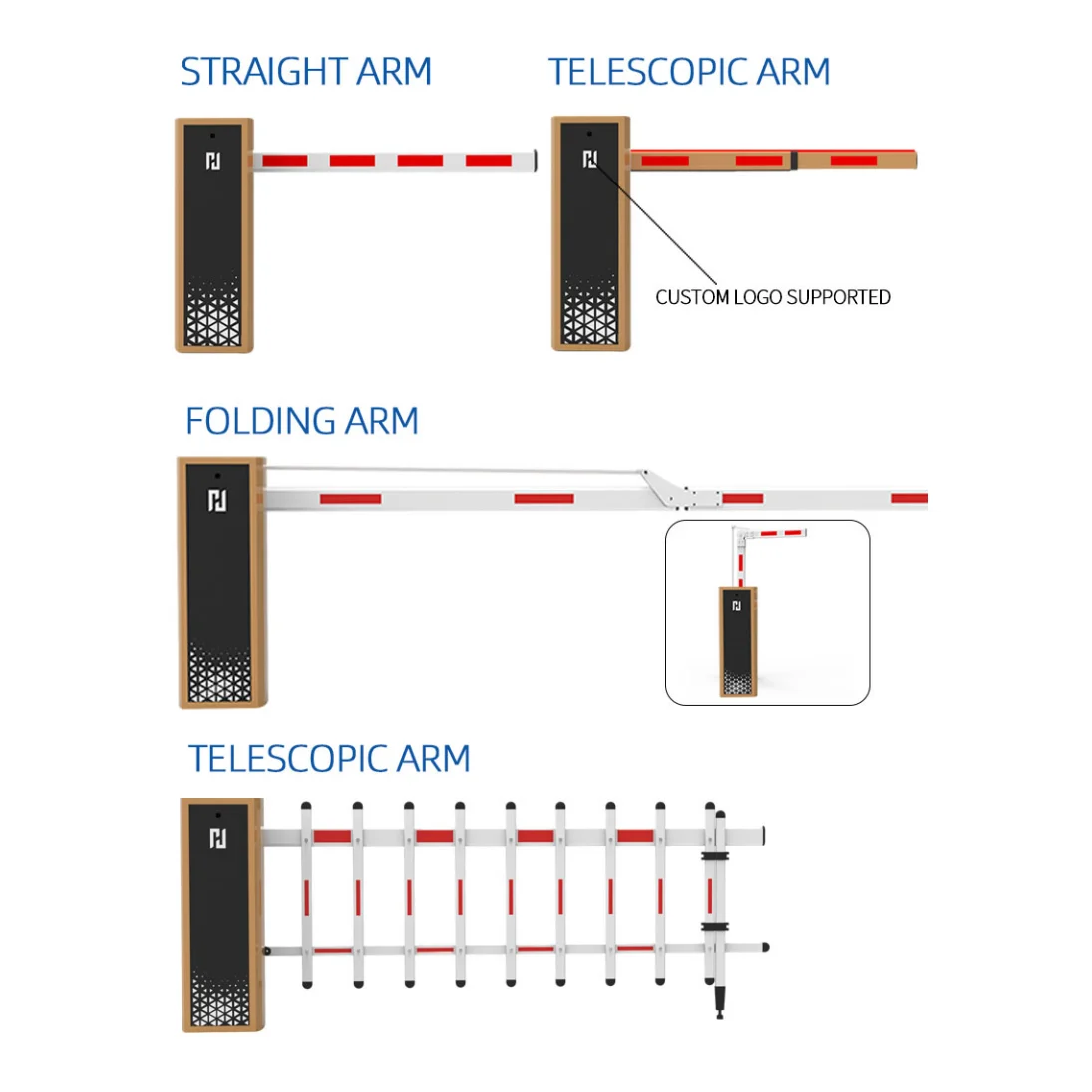
A straight arm is a rigid bar that lifts to the vertical position when the barrier opens. Its construction is simpler, and its requirement for free space above the lane is higher: the arm needs room equal to its length plus a safety margin. A folding arm has a hinged mechanism that folds the arm while it lifts, so the total height required is much lower. In exchange, the folding construction needs correct adjustment and enough space for the segments to move without touching a ceiling, a pipe or a lighting fixture.
2. When is a straight arm the better choice?
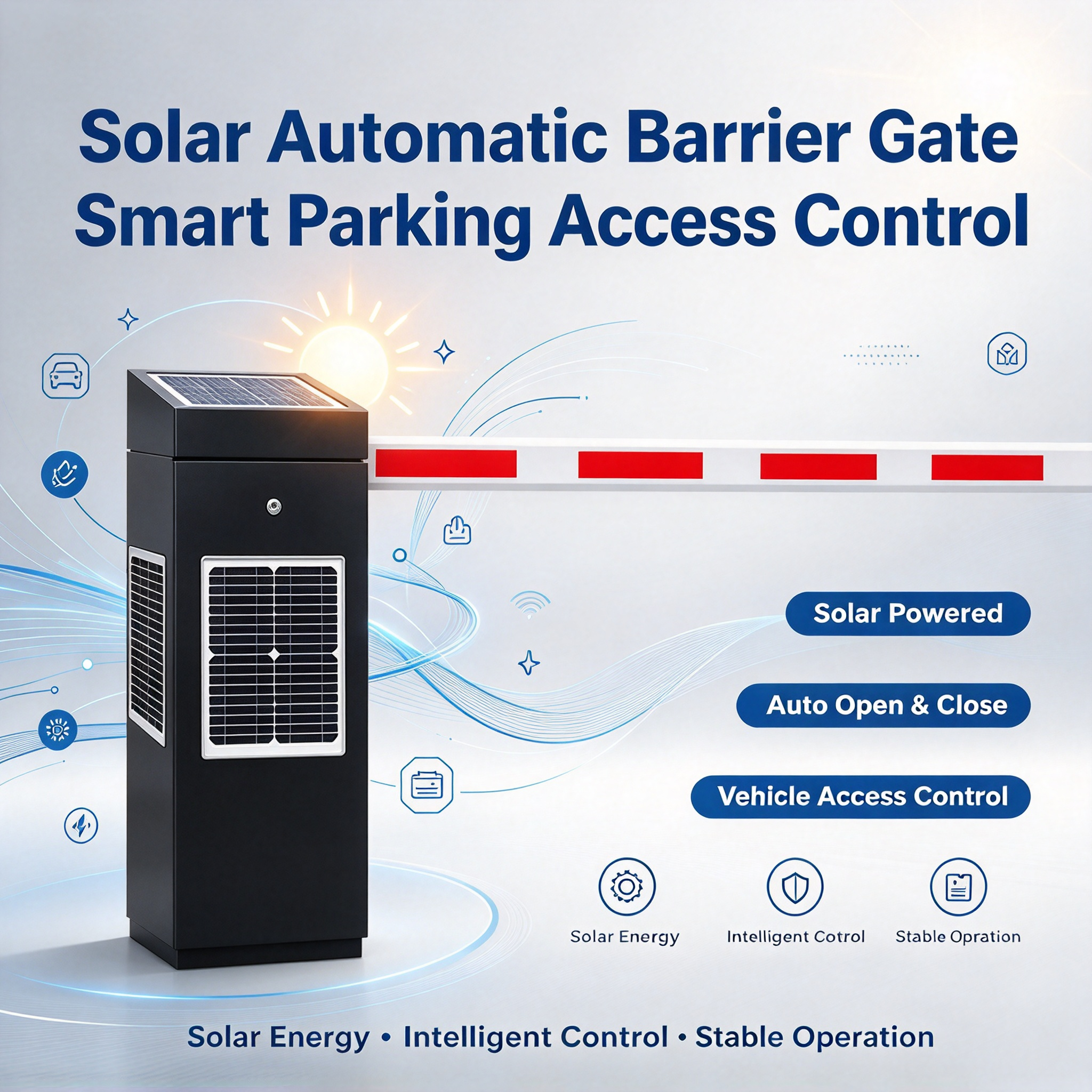
A straight arm is usually suitable for open car parks, factory entrances, residential yards and vehicle checkpoints where there is no low structure above the lane. It is a practical choice for a standard entrance if the arm length matches the lane width and the drive's permitted arm length.
Its advantages are a simple geometry, a visible and easily understood movement, and a wide choice of configurations depending on the model. Before installation, however, the lifting height, the free movement zone of the arm, the wind load and the manufacturer's maximum arm length must be verified.
3. When is a folding arm needed?
A folding arm should be considered for covered car parks, underground garages, entrances under a canopy and sites where a beam or a ceiling prevents a straight arm from lifting fully. It helps to use the available height, but it does not remove the need for precise measurements.
Before ordering, measure the height from the road surface to the lowest obstacle, the lane width, the distance to the walls and the position of the barrier cabinet. Confirm with the manufacturer the movement trajectory of the folding arm and the minimum clearances. It should not be assumed that any folding arm fits any drive model.
4. Straight and folding arms compared
| Criterion | Straight arm | Folding arm |
|---|---|---|
| Main application | Open entrance with sufficient overhead space | Entrance with a height restriction |
| Construction | Usually simpler | Includes a hinged mechanism |
| Measurement requirements | Lane width and lifting zone | Width, obstacle height and folding trajectory |
| Installation | Usually simpler with standard geometry | Requires verification of additional clearances |
| Maintenance | Fixings, balance and drive | Additionally the hinge joints, per the manufacturer's instructions |
| Length selection | Only within the specific model's limits | Also limited by the model's permitted configuration |
5. Does the arm type affect the price?
The cost depends on more than whether the arm is straight or folding. The barrier model, the permitted arm length and weight, the drive, the operating intensity, the safety sensors, the access control method and the installation work all affect the final price. A folding mechanism may require a specific configuration, so the price should be requested for a specific lane and model.
When comparing offers, ask suppliers to state the exact model, the arm type and length, the permitted opening time, the scope of supply, the foundation requirements and the cost of additional devices. This avoids comparing a basic model with an extended configuration.
6. Safety and sensors
For both arm types, it is essential to prevent the arm from closing on a vehicle and to detect a vehicle in the passage zone. Depending on the configuration, inductive loops, photocells, radar sensors and other compatible devices are used. For a folding arm, additionally check whether its trajectory crosses the ceiling, lighting fixtures, signs or other structures.
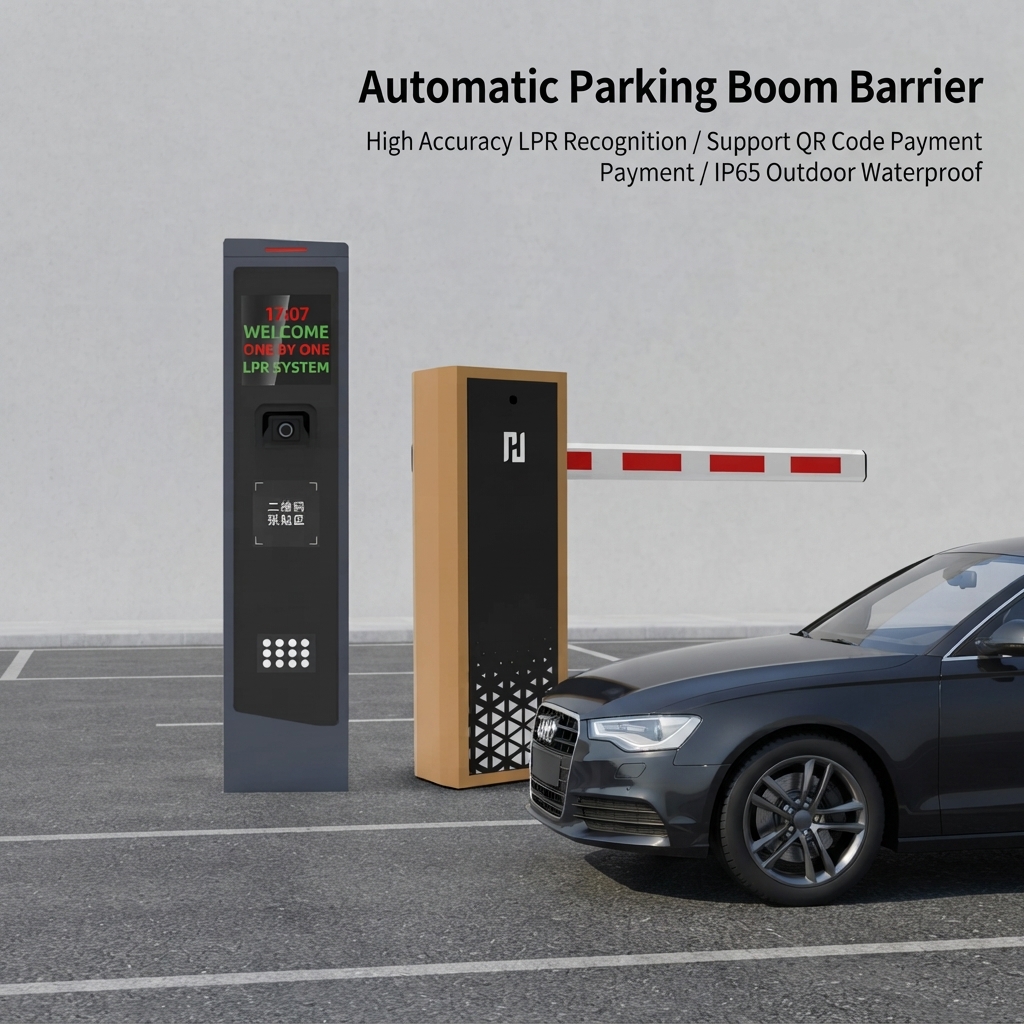
Do not determine the sensor package from the model name alone. Confirm which devices are included in the delivery, which are purchased separately and which interfaces are available for connection to the controller. After installation, test the sensors in real traffic scenarios.
7. How to choose an arm for cold-climate operation
For outdoor sites, consider wind, snow, ice, temperature changes and service accessibility. In a covered car park the ceiling height is often the key factor, while on an open site the permissible arm length, the stability of the configuration and the operating temperature of the equipment matter more. Conditions and limits must be confirmed for the specific BAROXON model.
8. A practical selection sequence
- Measure the lane width and the height to the lowest obstacle.
- Determine where the cabinet can be installed and in which direction the arm must move.
- Choose a straight arm if there is enough space above; consider a folding arm if the lift is restricted.
- Check the permitted arm length, speed and working intensity for the specific drive.
- Define the access control method: button, card, RFID, LPR/ANPR or integration with a parking system.
- Agree the safety sensors, the power supply requirements and the installation conditions.
- Request a drawing or written confirmation from the supplier that the selected arm is compatible with the barrier model.
9. How to specify a BAROXON configuration
The BAROXON website presents automatic barriers with different arm configurations and solutions for integration with access control systems. To select a configuration, provide the lane width, the height restrictions, the expected vehicle flow, the installation location and the desired control method. Ask for confirmation of whether the required straight or folding arm length is available for the selected model and which additional devices are needed.
Frequently asked questions
Which arm is more reliable: straight or folding?
Neither type can be called unconditionally more reliable. Reliability depends on whether the construction suits the installation site, on correct installation and adjustment, and on maintenance.
Can a folding arm be fitted instead of a straight one?
Only if the selected barrier model supports that configuration and the compatibility, permitted length and drive settings are confirmed. Do not replace the arm without agreement from the manufacturer or supplier.
What should be chosen for an underground car park?
If the ceiling or services prevent a straight arm from lifting, a folding construction may be the right option. The decision should be made after measuring the height and checking the arm trajectory.
What information is needed for a quotation?
Provide the lane width, the obstacle height, the installation location, the traffic intensity, the required arm length and the access control method. This data allows the configuration to be selected and an accurate quotation to be prepared.
Conclusion
A straight arm usually suits an open entrance with sufficient space above. A folding arm solves the problem of a low ceiling or canopy but requires precise measurements and confirmation of compatibility. Before ordering, agree the entrance geometry, the arm length, the operating parameters and the safety sensors for the specific BAROXON model.
Latest News
Baroxon® | Leading Boom Barrier Manufacturer
Advanced Security Access Control and Intelligent Parking Solutions.
Company Strength
Adequate Inventory
Fast Shipping
Our Products
CONTACT US
Address: No. 2 Wanshou Road, International Innovation Industrial Park, Jinan, Shandong, China







© 2026 Baroxon® | Leading Boom Barrier Manufacturer

Contact Us
Our passion is to bring your ideas to life. Work with our design team to create a one-of-a-kind custom finish or cladding system to create a truly unique space. Together we can make your story stand out. If you need something to request a sample, request pricing, or request a demo, please fill out the contact form below. Explain your request in as much detail as you can and a representative will contact you within 1 business day.